
Why Solana Explorers Matter: Practical Analytics and NFT Tracking for Real Users
Whoa! I still remember the first time I tried to trace an NFT transfer on Solana — nothing matched the mental map I had in my head. Something felt off about the data. Seriously? Transactions flying by at 400ms, clusters of activity that looked like noise but weren’t. My quick gut check failed me, and that pushed me to learn the tools properly.
Okay, so check this out—blockchain explorers on Solana aren’t just block readers. They’re your forensic kit, your market scanner, and sometimes your early-warning system. Short version: the difference between guessing and knowing is a good explorer. Longer version: with the right explorer you can track mint batches, detect wash trading patterns, validate royalties, and follow token movement across marketplaces, all without trusting third parties.
I’m biased, but I think explorers should be fast, clear, and honest about limitations. That part bugs me when sites obfuscate methods or hide data-lags. Hmm… the UX matters a lot. You don’t want to be a seasoned dev to read basic transaction flows.
What explorers do well — and where they trip up
At the core, explorers show blocks, transactions, and accounts. They parse logs, decode instructions, display token balances, and surface metadata. These are baseline features. But the real value is in analytics layers: token holders charts, contract interaction graphs, and NFT traits aggregation.
Short take: not all explorers are the same. Some excel at raw speed and block indexing. Others give richer NFT tooling. The trade-off is real—indexing aggressively can introduce errors if the parsing layer isn’t robust, while conservative indexing sometimes means stale data. On one hand you want up-to-the-moment tx history; on the other, you need accurate parsing of complex program interactions. Though actually, for most users the sweet spot is freshness plus clear provenance of parsed data.
Why trust matters: explorers that annotate transactions with program-level names (like Candy Machine mints or Metaplex interactions) are incredibly helpful. But if those annotations are wrong, you get misleading signals. So check whether the explorer cites source programs or offers raw logs for verification. I usually open raw logs as a sanity check—it’s a little nerdy, but worth it.
Here’s what I look for: block-to-block latency, accuracy of token metadata, depth of historical charts, and NFT collection tooling. Also very very important — API reliability. If you’re building dashboards or bots, the explorer’s API uptime is mission-critical.
Explorers and NFT tracking — practical tips
For NFT collectors and marketplace watchers, small details matter. Watch the mint authority. Check the update authority. Track creators and royalty splits. These things signal intent and long-term support for a project. If the creator’s key rotates unexpectedly, that’s a red flag. If you see a sudden inflow of tokens into a cold wallet and then dispersal, that could be market making or something more crafty.
Tip: use token holder histograms to spot concentration risk. If 5 wallets control 80% of a supply, be cautious. Also check trait distribution across the collection. Collections with a handful of ultra-rare traits behaving differently in floor price often reveal where collectors are allocating capital.
Oh, and by the way… track listing flows. Some marketplaces create price pressure by listing low then buying back. That pattern shows up if you correlate transfer timestamps with marketplace program instructions.
Analytics for DeFi on Solana
DeFi users need more than NFT views. You want liquidity pool analytics, swap routing visibility, front-run risk indicators, and deposit/withdrawal histories. A solid explorer surfaces program-level interactions (Serum, Raydium, Orca) and links to the underlying pools. That linkage is what allows you to see slippage risk and implied liquidity depth before you trade.
Consider flash loan activity. On Solana, rapid sequences of swaps can be subtle. Look for high-frequency transaction bursts tied to single signers. If a wallet repeatedly interacts with a set of program IDs within milliseconds, that’s an automation signal — could be a bot, could be arbitrage. Your explorer should let you zoom into those micro-bursts.
And yes, the analytics layer should expose fees and rent-exemption changes where relevant. Small costs add up when you run many transactions.
Choosing the right explorer — a short checklist
Who cares about interface polish? You do. But here’s a checklist that matters more than pretty charts:
- Indexing latency and accuracy (is data updated and correctly parsed?)
- Program-ID annotations and raw logs access
- NFT collection pages with trait aggregation
- API availability, rate limits, and documentation
- Historical analytics (holder distribution, transfer heatmaps)
- Export capabilities for on-chain proof or audits
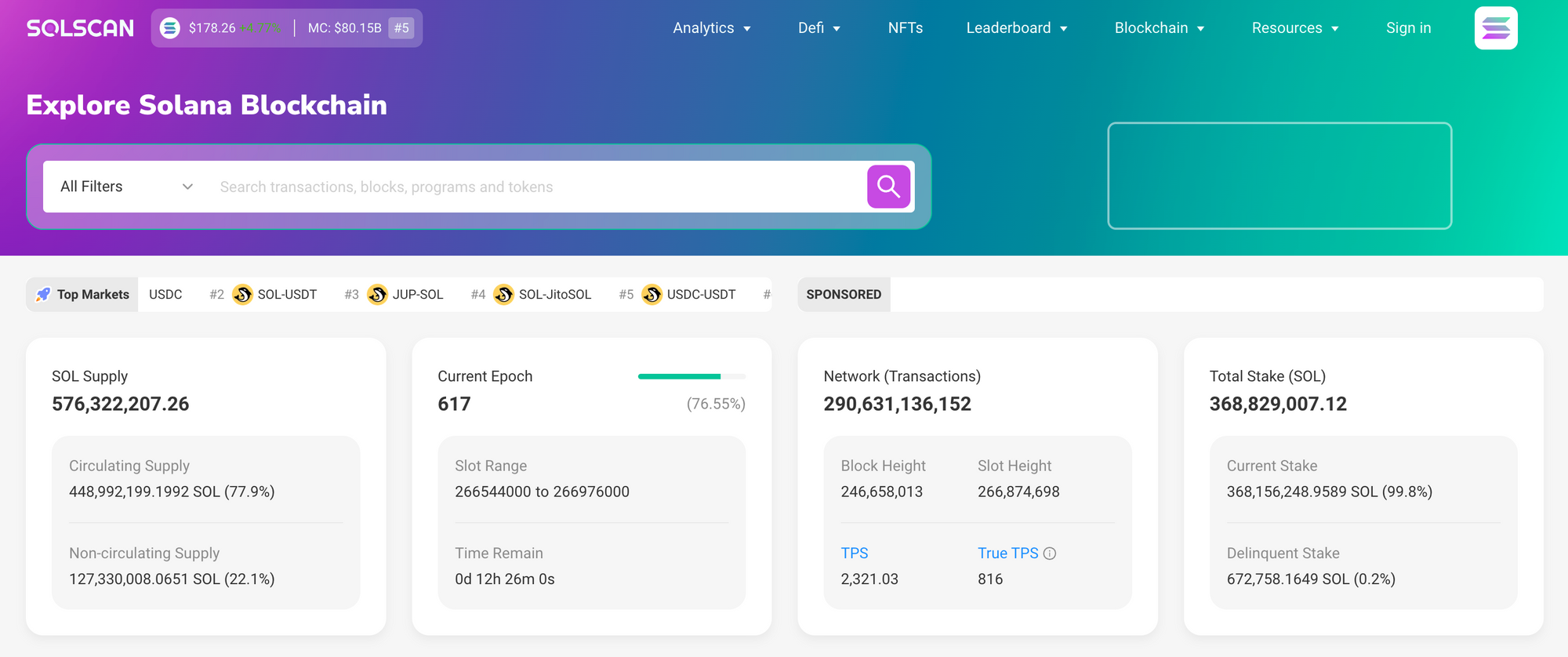
If you’re looking for a daily tool, try exploring one that balances UI clarity with robust APIs. My go-to for many of these workflows has been the solscan explorer—it’s fast, gives clear program annotations, and handles NFT collections smoothly. You can check it out here: solscan explorer
Yes, I’m recommending it. I’m not saying there aren’t other good tools. But for practical day-to-day tracking it’s very useful. I’m not 100% sure every feature will fit your workflow, but it’s a reliable starting point.
Common pitfalls and how to avoid them
Many users fall into the trap of trusting a single metric. Floor price alone is deceptive. Volume spikes can be wash trades. Single-sale appearances without wallet provenance are suspicious. My instinct said to trust volume initially—then I realized volume can be manufactured.
Actually, wait—let me rephrase that: triangulate. Use multiple signals. Check holder turnover, listing depth, and Discord/community activity for corroboration. On-chain data tells part of the story; off-chain signals fill gaps.
Also, beware of UI filters that hide low-value sales or aggregate weirdly. If you can’t see raw transactions, you’re missing the full picture.
FAQ
How can I verify NFT provenance on Solana?
Start with the mint transaction and the metadata account. Confirm the creator addresses and royalty fields. Cross-check with marketplace listings and creator announcements. Use the explorer to view raw logs and the program interactions that created the metadata. If something looks off, trace the token history to see if it was transferred through suspicious intermediary wallets.
Which analytics matter most for traders?
Liquidity depth, recent swap activity, historical slippage, and concentrated holder risk. Also check for automated trading patterns that could indicate front-running risk. Combine on-chain charts with quick API queries to model potential slippage for your intended trade size.
Can explorers detect wash trading?
They can help. Look for repeating cycles of transfers between small clusters, identical tokens moving among the same wallets, or sales that alternate patterns at consistent intervals. These signals aren’t definitive proofs alone, but when combined they point to suspicious activity.
Okay—closing thought. Blockchain explorers on Solana are powerful, but they require context. Use them as tools, not oracles. Keep checking raw logs sometimes. Trust but verify. Somethin’ about that feels very old-school, but it’s how you avoid surprises.
Comments (No Responses )
No comments yet.